

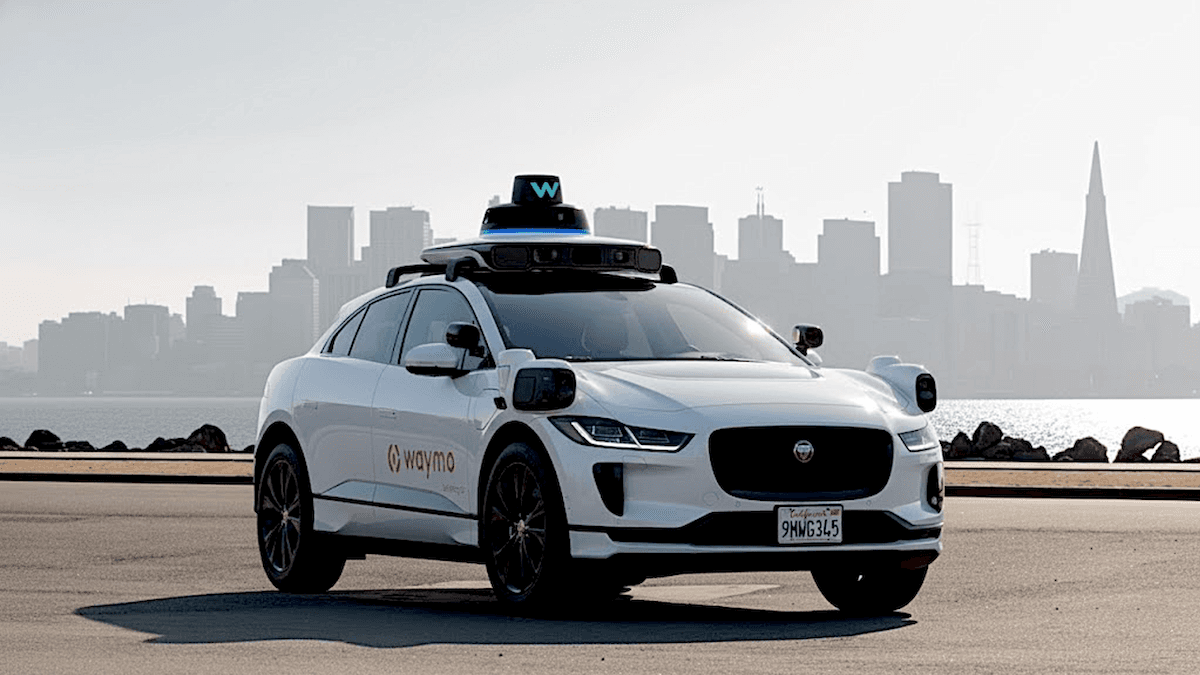
Waymo became the first company to offer fully autonomous, driverless taxi service on freeways in the United States.
What’s new: Waymo’s fleet is serving paying customers on high-speed roads in San Francisco and Los Angeles, California, and Phoenix, Arizona. The service is available to customers who have selected the Waymo app’s “freeway” preference, if the app determines that using freeways will result in a substantially faster trip.
How it works: Waymo, which operates thousands of vehicles in the San Francisco Bay Area, provided the most information about freeway service in that region. Its vehicles are plying the freeways that border roughly 260 square miles between San Francisco and San Jose, cutting ride times by as much as 50 percent.
- Autonomous vehicles have shuttled employees, members of the press, and other guests on freeways for more than a year.
- The vehicles were tested on millions of miles on public roads, closed courses, and simulated roads to gather sufficient examples of traffic maneuvers, system failures, crashes, and transitions between freeways and surface streets. The company generated redundant synthetic scenarios and produced varied training examples by tweaking variables related to the vehicle's behavior, the actions of others, and environmental conditions.
- In addition, the company is concerned with managing the psychological impact of autonomous freeway driving, Waymo co-CEO Tekedra Mawakana said. Riders in self-driving vehicles surrender control, and this may be more worrisome at 65 miles per hour than at lower speeds, she said.
- The company worked with the California Highway Patrol to develop protocols for autonomous freeway driving.
- The California Public Utilities Commission had approved Waymo’s vehicles for freeway driving in March 2024 as part of a plan that includes adding more cars to the city’s streets and operating at any hour.
Behind the news: Waymo has its roots in vehicles built by the Stanford Racing Team to compete in the DARPA Grand Challenge and DARPA Urban Challenge autonomous vehicle contests in the mid-2000s. Google adopted the project in 2009 and spun out Waymo as an independent company in late 2016.
- It currently operates in Atlanta, Austin, Los Angeles, Phoenix, and San Francisco and has announced plans to expand into Dallas, Denver, Detroit, Las Vegas, Miami, Nashville, San Diego, and Seattle with several other cities on the drawing board including London and Tokyo.
- Although its safety record is not pristine — in September, a Waymo car killed a pet cat in San Francisco — the company claims that its cars have experienced 91 percent fewer injury-or-worse crashes and 92 percent fewer pedestrian crashes with injuries than human drivers who drive the same distances in the same area.
- In 2024 and 2025, the U.S. National Highway Transportation Safety Administration opened separate investigations into Waymo for alleged violations of traffic laws.
Why it matters: Operating on freeways is critical for self-driving cars to function fully as alternatives to human-driven vehicles. Fully autonomous freeway driving is a significant technical step forward for Waymo, since its cars must shift smoothly from city driving to freeway driving, where conditions are less tightly controlled, and systems must plan farther ahead and react more quickly to adjust to changes at higher speed. In addition, obtaining government approval to put Waymo cars on freeways is a huge accomplishment from regulatory and social perspectives. The company managed to persuade regulators that the benefits of putting self-driving cars on freeways outweigh the potential costs, including threats to safety and public trust. Waymo’s aggressive plans for expansion suggest that this is the first of more milestones to come.
We’re thinking: Andrew still has his t-shirt from the DARPA Urban Challenge. He remembers the optimism of those days, and how much longer than early forecasts it has taken to develop roadworthy self-driving vehicles. Between Waymo’s robotaxis and Tesla’s Full Self-Driving (Supervised) capability, the question is not whether this technology will become commonplace but when.